Saturday, July 26, 2008

On heroes and being blessed by mountaintops

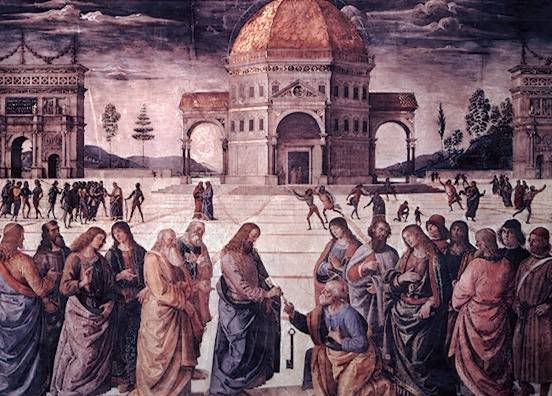
This morning I am gripped by the metaphor of mountains. They are not only awe-inspiring, they speak to many elements of human existence.

I saw these mountains last winter, and they still invoke emotion as I remember them (and I hope to see them again in the near future!).


As we go through life we are climbing through ideas, hoping we are not lost and going the right way. But how do we know which way to go?

At the "peak" of my thinking as a Protestant (in terms of consistency, not lucidity or genius), I came to a point where several friends either jumped off this peak or stayed to brave the winds of isolation.

In thinking that my thinking was the key for me to find truth, that there was no truly faithful interpreter of scripture, life, etc., I had to say that whenever I was not in full agreement with someone on a matter that I had thought through, if I was not persuaded by their arguments I had to conclude that that person failed the test of being a hero of mine. I would come to realize that as many Christians climbed up a broad based mountain, the higher we traveled the more we diverged. We would climb and say hello as we went, but as the issues became thornier, the "one" mountain turned out to be more of a range, with many jagged peaks that ultimately separated the climbers.

Many who I respect say that this process leads one to have no spiritual heroes, for many of us use our mental powers on our own and find ourselves not quite agreeing with any author who teaches about spiritual truth. They would argue that heroes are for the naive, either implicitly or explicitly.

But I would refuse to give up that there are no heroes, scouring the earth and lamenting that the only real heroes one could have would be those who had great talent in one area of their life, while openly admitting their huge flaws.

In the realm of the arts, for me this has historically included Elvis Presley, Andy Kaufman, Orson Welles, and others. Of course, that is more in the realm of the arts. In the religious world, the story was different. I found myself agreeing more and more with my cynic friends, and thought of some alternatives.

One would be to take the gaps which divide us and try to speak from peak to peak. But just as this is not very practical in the midst of storms full of howling winds, history has shown that divisions cannot be mended by merely speaking up. When the winds do not roar and the air is not full of clouds, sure, there can be some amount of communication. But it's a far cry from the vision of Our Lord, who prayed that we would be one as He and His Father are one (John 17).

Another would be the idea of climbing down from the peak that separated us. Since the progress of defining spiritual issues led us to get separated, why not discard our differences and meet at the common ground of things that unite us? But I realized that
this would not work on its own, because who is to say what is essential to one's faith? Furthermore, I have found that this goes against the basics of human nature. As one example, take baptism. If you have come to be persuaded that children of believers must be baptized to be obedient, how can you throw aside the arguments that got you to thinking that? It would take an unnatural suppression of one's conscience, and leads to such fights as this, where some Reformed Baptists have advocated withholding the Lord's Supper from Presbyterians due to their "sin" of baptizing children. Mind you, this discussion was brought up in the midst of an attempt to be "together for the gospel", and not during some party spirit-based rallying cry for being good Baptists or Presbyterians (or what have you). Ultimately, I cannot see the regression to some "lowest common denominator" as a viable means of the kind of unity in Christ's prayer in John 17.

The only other way to look at the mountain range is to argue that this whole process of separation is fundamentally flawed. What started off as one range has led to a plurality of ranges, some being safe and others being treacherous. This would fit the ideal of Christ's prayer, but it has a problem, namely that one has to figure out which range is correct, and what to do to bring the erring peaks back together again. I would argue that there is only one option that makes historical sense, and it happens to have sincere love for all the ranges, even when they've gone off on tangents. Every other option that advocates this way of thinking leads to a lone peak saying it's the only real mountain. And that is the most unreal option of all.


Every other analysis that is not one of these three is a permutation of one, I would argue. But you could prove me wrong....


Now, all of this comes to mind because I'm reading a book by one of my newly gained spiritual heroes, Archbishop Fulton Sheen. I should have blogged about him before, but that's how life goes. This is what he has to say about the Beatitudes. Interestingly enough, his thoughts also focus on the unity of different mountains which many have also separated artificially.


Think about this quote today, and you will see that this great truth of the unity of mountains as applying not only to the Church, but also to Our Lord's ministry. So many people have separated Christ's death on the Cross from his "merely moral" teachings. Sheen takes the ideal for a holistic view of the world and shows that the same is true of Our Savior. Read Sheen, and be challenged to view the world in the unity that it is based upon:

Two mounts are related as the first and second acts in a two-act drama: the Mount of the Beatitudes and the Mount of Calvary. He who climbed the first to preach the Beatitudes must necessarily climb the second to practice what He preached. The unthinking often say the Sermon on the Mount constitutes the "essence of Christianity". But let any man put these Beatitudes into practice in his own life, and he too will draw down upon himself the wrath of the world. The Sermon on the Mount cannot be separated from His Crucifixion, any more than day can be separated from night. The day Our Lord taught the Beatitudes, He signed His own death warrant. The sound of nails and hammers digging through human flesh were the echoes thrown back from the mountainside where He told men how to be happy or blessed. Everybody wants to be happy; but His ways were the very opposite of the ways of the world.

Friday, July 25, 2008

Did I mention that I love cats?


Thanks, Pearson's.

Note: being the doubting scientist that I am, I want you all to know that snopes.com has verified this story as true. The part with the "wife" lion had me especially doubtful, but rest assured this is a genuine story!

Thursday, July 24, 2008

The Gluttony of Worms (and other oddly named provinces)


I am rereading Hilaire Belloc's book How the Reformation Happened. It is so full of facts and statements about a monumental time in history that I think I'll end up reading it at least one more time.

One statement of his is especially true, as I survey my society and its surroundings.

In describing the flaws of those looking back at certain controversies in history, he notes how so few people actually read the texts of the day leading up to the event in question.

To quote Belloc on these historians:
"Again (another grave weakness in his trade), he did not read the key-points: he despised and neglected those writings which would have explained to him the formation of that very culture from which he proceeded."

I think for me a key thing to understand is exactly how Luther interacted with his peers in his day. This letter to Pope Leo X is enough to make one question all of the things that movies and stories of lore have stated about Martin Luther.
It was written in 1518, roughly 1 year from the infamous day when Luther nailed his 95 theses on the door of the church in Wittenberg. Also keep in mind that no Catholic has accused those theses of being unorthodox. But let's keep our minds back in the 1500s.

I want to point out some key parts of this letter that are particularly poignant to me.

Luther starts off by saying:
To the
Most Blessed Father,
LEO X.
Martin Luther,
Augustinian Friar,
wisheth everlasting welfare.

I have heard evil reports about myself, most blessed Father,
by which I know that certain friends have put my name in very
bad odor with you and yours, saying that I have attempted to
belittle the power of the keys and of the Supreme Pontiff.
Therefore I am accused of heresy, apostasy, and perfidy, and
am called by six hundred other names of ignominy. My ears
shudder and my eyes are astounded.

Note that the claim that the successor of Peter contains a special merit of leadership by having power from the keys handed to him through Christ cannot be an innovation from Vatican I (in the 1800s), as Luther himself is fluent with this idea. Note also his thoughts on the 95 theses--at this point his actions, whatever they were meant to produce, did not include an attack on Rome. They may have had stern words for Tetzel or some local Germans using indulgences for evil purposes, but Luther does not impute this to the Papacy.


Another statement later on in the letter shows me how the common legend that the world was in some sort of blind stupor of allegiance to the Church, with no regard to any corruption of the day, is utterly false. It is commonly said that Luther rang a clarion call against corruption, as though no other human before him had the heart and soul to cry out against corruption. On the contrary, Luther states:

None the less, however, stories about the avarice of the
priests were bruited in the taverns, and evil was spoken of
the power of the keys and of the Supreme Pontiff, and as
evidence of this, I could cite the common talk of this whole
land.

If this were the common talk of the whole land, how could there have been a general blindness to corruption? What was so special about Luther's observations?


At the end, his closing includes these words:

Wherefore, most blessed Father, I cast myself at the feet of
your Holiness, with all that I have and all that I am.
Quicken, kill, call, recall, approve, reprove, as you will. In
your voice I shall recognize the voice of Christ directing you
and speaking in you. If I have deserved death, I shall not
refuse to die.

Again, I am struck by Luther's devotion to the Pope. The key thought that I would ask you to consider and ask yourself is to read the whole letter and ask, what changed? Did he discover that the local corruption led to the root at Rome? Was he fed up with trying to invoke reforms? Was it something else?

It is clear that Luther's thoughts underwent major changes, as did the world at large. Looking more closely at his interaction with the Church leadership, and the thoughts he formulated as he broke away from submission to the Pope may unravel how, in a sense, the Christian world unraveled at the initiation of the Reformation.

Monday, July 21, 2008

The inherent chauvinism of the antipapal mindset

{This is a work in progress}

More thoughts on Saturday's debate....

I was particularly struck by the patent acceptance that the Pauline letters are silent regarding the Pope. First, there should have been a clearer insistence that that says nothing about what we as Catholics think about the Gospels' mention of Peter's role.

Secondly, the more I think about it, the more I cannot blithely accept this premise, that Paul says nothing about the Church's structure. After all, the analogy of the Church as body does include the logical conclusion that there must be a centralized head in the Church.

If one were to only read 1 Corinthians, there would be no question on the matter. Chapter 12 is the most detailed discussion of how the body should not be at war with itself, nor should members denigrate each other.

To quote:

"12The body is a unit, though it is made up of many parts; and though all its parts are many, they form one body. So it is with Christ. 13For we were all baptized by[c] one Spirit into one body—whether Jews or Greeks, slave or free—and we were all given the one Spirit to drink.14Now the body is not made up of one part but of many. 15If the foot should say, "Because I am not a hand, I do not belong to the body," it would not for that reason cease to be part of the body. 16And if the ear should say, "Because I am not an eye, I do not belong to the body," it would not for that reason cease to be part of the body. 17If the whole body were an eye, where would the sense of hearing be? If the whole body were an ear, where would the sense of smell be? 18But in fact God has arranged the parts in the body, every one of them, just as he wanted them to be. 19If they were all one part, where would the body be? 20As it is, there are many parts, but one body. 21The eye cannot say to the hand, "I don't need you!" And the head cannot say to the feet, "I don't need you!" 22On the contrary, those parts of the body that seem to be weaker are indispensable, 23and the parts that we think are less honorable we treat with special honor. And the parts that are unpresentable are treated with special modesty, 24while our presentable parts need no special treatment. But God has combined the members of the body and has given greater honor to the parts that lacked it, 25so that there should be no division in the body, but that its parts should have equal concern for each other. 26If one part suffers, every part suffers with it; if one part is honored, every part rejoices with it.27Now you are the body of Christ, and each one of you is a part of it. 28And in the church God has appointed first of all apostles, second prophets, third teachers, then workers of miracles, also those having gifts of healing, those able to help others, those with gifts of administration, and those speaking in different kinds of tongues. 29Are all apostles? Are all prophets? Are all teachers? Do all work miracles? 30Do all have gifts of healing? Do all speak in tongues[d]? Do all interpret? 31But eagerly desire[e] the greater gifts. "


Note that Paul points to hypothetical instances of members of the body disregarding each other in disunity, and in mentioning the ear, the eye, and the head, he treats all components (including the head) as though they could be guilty of such a travesty.

If we are to assume that Paul's understanding of the body is a "headless horseman" capped by Christ as head, I would argue that Paul would not have evoked such imagery. He could talk of hands denigrating feet, but not eyes denigrating hands. For that would mean that Christ is sinning by spurning the hands, etc., and how can that be the case?

So we are left with the other passages where Paul DOES describe Christ as the head. What are we to make of these words? First, the Catholic should be quick to agree that of course, He is the Head of all believers, Pope and nun alike.

Secondly, the imagery of Christ as head should never be divorced from other imagery describing our relationship with Him. Indeed, the epistle that is most forceful about Him being the head is one where one cannot surgically separate another relationship. And that epistle would have to be the letter to the Ephesians. There we find the role of Christ as head is intimately united to His position as our divine spouse.

In Ephesians 5, we find this fact clearly delineated.

To quote:
22Wives, submit to your husbands as to the Lord. 23For the husband is the head of the wife as Christ is the head of the church, his body, of which he is the Savior. 24Now as the church submits to Christ, so also wives should submit to their husbands in everything.25Husbands, love your wives, just as Christ loved the church and gave himself up for her 26to make her holy, cleansing[b] her by the washing with water through the word, 27and to present her to himself as a radiant church, without stain or wrinkle or any other blemish, but holy and blameless. 28In this same way, husbands ought to love their wives as their own bodies. He who loves his wife loves himself. 29After all, no one ever hated his own body, but he feeds and cares for it, just as Christ does the church— 30for we are members of his body. 31"For this reason a man will leave his father and mother and be united to his wife, and the two will become one flesh."[c] 32This is a profound mystery—but I am talking about Christ and the church. 33However, each one of you also must love his wife as he loves himself, and the wife must respect her husband.

There is something here that I believe our Protestant brethren our overlooking in emphasizing Christ as the Head in passages such as this.

Note what Paul says in verse 23, and consider the fact that this element of Christ as head is compared to the husband as head of the wife.
First, it does evoke the marriage imagery that is strongly described in the Apocalypse of Saint John.
Secondly, note the correlation in terms of the human existence. Do wives submit to husbands as their head in some sort of amorphous body with no mind? I'm sure some married men wish this were the case, but that would be to exist in a loveless relationship. On the contrary, there is the struggle for harmony among two wills, such that while one may be the "lord" of the other, this does not negate the head/mind/will of the bride.

As such, both the use of logic and the fuller analysis of Ephesians leads us to repudiate the visible body of Christ as lacking a visible head. It is only some chauvinistic fancy that would keep us in denial of this reality, if we really consider Paul's usage of the phrase that Christ is the head of the Church in Ephesians 5.

Sunday, July 20, 2008

The Honor of Honorius


Last night I attended a dinner party for Christians who are interested in unity. The great part about it is that these meetings not based on talking about warm and fluffy things that we have in common. Instead, there is a relatively formal debate on issues that we do not have in common. Last month I attended a debate over whether some sins were mortal and others were venial, which made for some interesting discussion.

But this one had me far more excited at the outset, for it was about a far more central difference between Protestants and Catholics--the primacy and infallibility of the Bishop of Rome.

Biblical, historical, and logical arguments were presented and at some times it was in an unbiblical, ahistorical and illogical manner, but the point is that much controversy ensued. I could say quite a bit about the strengths and weaknesses of both sides throughout this debate, but I'll stick with one criticism from the opening statement of the Anglican minister. This will allow me to stay focused (always a problem for my flitting fancy) and more importantly this criticism of his is the most important way that one would be able to formulate a criticism of Rome's claims about the papacy, in my opinion.

Before I state what was stated, let me relate the actual official statement on infallibility as Roman Catholics understand it:


891 "The Roman Pontiff, head of the college of bishops, enjoys this infallibility in virtue of his office, when, as supreme pastor and teacher of all the faithful - who confirms his brethren in the faith he proclaims by a definitive act a doctrine pertaining to faith or morals. . . . The infallibility promised to the Church is also present in the body of bishops when, together with Peter's successor, they exercise the supreme Magisterium," above all in an Ecumenical Council.418 When the Church through its supreme Magisterium proposes a doctrine "for belief as being divinely revealed,"419 and as the teaching of Christ, the definitions "must be adhered to with the obedience of faith."420 This infallibility extends as far as the deposit of divine Revelation itself.421

892 Divine assistance is also given to the successors of the apostles, teaching in communion with the successor of Peter, and, in a particular way, to the bishop of Rome, pastor of the whole Church, when, without arriving at an infallible definition and without pronouncing in a "definitive manner," they propose in the exercise of the ordinary Magisterium a teaching that leads to better understanding of Revelation in matters of faith and morals. To this ordinary teaching the faithful "are to adhere to it with religious assent" which, though distinct from the assent of faith, is nonetheless an extension of it.

Point #891 states that when the Popes make definitive acts decreeing on matters of faith or morals that he will speak without error.

Point #892 of the catechism also goes on to note that all bishops, not just the Pope, have divine assistance assuring them of being in truth, when they teach in communion with the Pope.

Let's stop and note what it does not say:

It does not confuse the office of Pope with his personal life. That a very small minority of Popes had illegitimate children, were greedy, murderous, etc., says nothing about this matter. Nor does it mean that at no point in their life will they deny Christ, as Peter himself did while Christ was on trial.

It also is not confused into thinking that the Pope will always say the best thing. Their responses to all heresies will not be the most quick-witted or even clearest.

It also narrows the scope of interest to what interests us as Christians-matters of faith and morals.

Instead the guarantee is that the successors of Peter will not teach errors. They will not fail (hence the phrase infallibility) to teach things that should be believed by Christians. Could our understanding get better as time goes on? Yes, and we should growing in the depth and clarity of our love of Our Lord. More importantly, that is exactly what the development of the councils that have occurred in history indicate.

Now, all of this preface is to make sure we are on the same page, so as to not construct any straw men in our argumentation.


Let's now dive into the actual argumentation. As I said, the key way to convince me that these claims are falsified is through historical analysis. The debater last night did invoke such historical analysis in his opening points. What era of Church history was cited? The answer: the monothelitist controversy as it took place in the 600s.


Remember, at 451 the Coptic Church began, as the idea that Christ has two natures was decreed in opposition to them. The Copts decried that as heresy, and essentially the first Protestant Reformation occurred. Their view is that Christ's human nature was subsumed by his divine, thus they are called Monophysites, meaning one nature.

In the 600's, the separation was still on the minds of many Christians (as it should be on our minds today), and some new wording that stated that Christ had just one will was being advocated by some. He may have had two natures, but he had one will. This view is called the monothelite view, as thelos means will in Greek. It was hoped that this would win back the monophysites.

From 625-638, Honorius was the Pope, the bishop of Rome. As mentioned by my Protestant brother, the sixth ecumenical council in 680 condemned this Pope over his connection to the monothelite heresy.

Now, these are surely difficult matters to delve into, but that's where things are exciting and fun.

Why was Honorius condemned? The simple answer is that he was condemned because did not condemn his monothelite contemporaries. In fact, he seems to almost be sympathetic to them when he writes to them or about them in private letters. The debate rages to this day over whether Honorius was in agreement with the monothelites or not, but the important thing to grasp is this: the debate does not rage over whether Honorius made any public statements or convened over any councils that made the error of monothelitism a binding truth for believers.

His real failure was that he did not stop monothelitism when he could have. Now first, we should note that implicitly this gives Rome's claims historical backing, as his critics are asking him to stop other bishops, which would be beyond his power if Rome's claims were false. But more importantly, Honorius did not proclaim monothelitism or approve a council that was in favor of monothelitism.

Again, his failure was a failure to stop heresy.

And so I title this post The Honor of Honorius--he failed in many senses, but he's still honorable for not publicly proclaiming heresy. I cannot say the same for myself, if you count Christians on Campus at Chino High. But I digress.

More importantly, there is a great honor in the line of Popes that one can see if one is not afraid to search the pages of history.

For last night's debate reinforced what I feared as I first embarked on this journey.

There was only an 8 minute opening statement alloted to last night's debate, and this well-studied and eloquent minister had 2000 years of history to sift and to ponder on. When his attack hinged on history, he decided to choose Honorius. Why? I would argue that it's because that's the closest one even gets to resembling a disproof of infallibility. And it's not even close. Don't you think that if there were Popes denying things like Christ's divinity, etc., that that would have been used in this debate? Instead, we're left with Honorius, who is not so dishonorable after all.

You can read more from the Catholic perspective here.

Philip Schaff's church history presents the Protestant perspective here.

Saturday, July 19, 2008

Wednesday, July 16, 2008

back

So I am back from a cross country trip.

That is all.....

Monday, June 30, 2008

June's Reads

This month was less eventful in the reading department than I had hoped because it has been so overwhelming in other departments. I suppose that's ultimately a good thing.


Here's what I managed to finish. Several other reading tasks are en route, but c'est la vie.


Autobiography-G.K. Chesterton

I love this book-great things like wine get better with age, and as Chesterton's last book prior to his departure to a better place this is no exception to that rule.
Apparently he had shunned the idea of writing an autobiography for a long time,and just weeks before dying this magnum opus by a vir magnus was completed. Just like everything else I've read by him, this work approaches the task of talking about one's self from a unique angle of looking at his world around him. Capturing his essence of being thrilled by normal existence, one gets a sense of how he thought about his own life. We leave the realm of theoretical argumentation and theoretical people in his treatises and novels, and enter the more primitive thought of one's own life.

Just as one example, he starts the book by pointing out that his very birth is a mystery-he has no memory of this undoubtable fact, and yet this lack of "proof" is supposedly the basis of doubt. With tangents that delight the mind, I have to place this book towards the top of the Chestertonian canon.


Catholic Christianity - Peter Kreeft
Former Dutch Reformed philosophy professor meets the huge volume of the Catechism-the ensuing work is a logical but warm read about how one can understand Catholicism rightly, and how one can understand it wrongly. I'm especially appreciative of how he often sets certain issues such as justification in the light of Protestantism and other philosophies of life. Appreciating the truth in beauty in all of the world without compromising his positions on Mary, the saints, etc., this makes for a great read to help one have a foundation for what it is that the Church teaches.

You can preview it here.


The Compendium of the Catechism of the Catholic Church - Pope Benedict XVI
So I mentioned above that Kreeft's work on the Catechism makes the Catechism easier to understand. Well, the compendium is what you get when Pope Benedict and friends make the 1994 Catechism easier to understand. Going back to the question and answer methodology that one sees in Catechisms such as the Westminster or Baltimore catechisms, this compendium is a succint but accurate portrayal of the tome that is the Catechism of 1994.


Fantastic Mr. Fox - Roald Dahl
What do you get when you tell me that one of my favorite directors in movies is working on an adaptation of one of my favorite novels? Me running to Barnes and Noble to add on to my collection of books! (Can you believe I have cheesier ways of conveying my thoughts on this book that I spare for the medium of the internet?)

Roald Dahl's small but exciting book about more underdogs in the world who are wronged seeking justice through mischief and ballyhoo was a great way to spend a few hours or so with my kids before I left on a trip to California. I can't wait to see
what will happen when Wes Anderson makes this movie. I'm pretty sure it will be animation, but will it be computer? Or how about a Tennenbaums-style set of sketches that come to life? As long as people who worked on Shrek stay at least 1000 miles from him at all times, I think we'll be fine. But what do I know?
HT Chad:

Saturday, June 28, 2008

If you love me at all,

you will read this blog post by Bryan Cross, former Protestant. The way that he describes the nature of God's sovereignty and our role (or lack of a role) in salvation is essential to understanding any dialogue between Catholics and Protestants.

Friday, June 27, 2008

cancion del segundo

Tuesday, June 24, 2008

Spiritual Lessons From a Cell Phone


I write this post with an admittedly silly source of inspiration. Maybe it's better to just term this as a blog that is written for fellow users of the phone pictured above. I have had the T-Mobile Dash since October of 2006. I used to enjoy it much more, when I could access the internet for 5.99 a month through a quasi-loophole.

I also used to enjoy it much more when the battery held a charge well. After about 10 months of use, things were deteriorating. I would charge the phone for hours and it would run out of power within 1 hour. A few months later, I ordered a new battery from some ebay dealer for a few bucks. That sounded like the solution, except within 3 or 4 uses I was certain that this battery also suffered from the same problem. And so it was that for the next 5 months I would deal with a phone that would run out of batteries after about 45 minutes of talking time even if I left it in the charger all night. Of course, some nights I would be too tired, so as you can imagine, on some days I would have to charge it 3 or 4 times during the day because of a failure to do the overnight charge.

My pessimism over this phone reached its climax last week. I was on the phone near my computer and had it charging for about 4 hours that way. I left it in the charger, knowing its frailty.

It was to my great disgust that while on the phone the battery died, despite the charge going! I grabbed my wife's phone and called my friend back and continued the conversation, cursing the weakness of my phone. I was too tired to turn the phone back on so it wouldn't serve as an alarm and if anyone called me due to any possible emergencies, etc., I would be unable to answer.

The sun rose on the next morning with hope in its wings. For to my great surprise, as I turned the phone on after ~4 hrs of charging, it carried its battery throughout the day! I even neglected to charge it that night, and on the next day by late night it eventually was losing bars, but this was day TWO!

That's when I realized that my phone's charger, or the phone's design, the battery, or some odd combination of these various engineering components whose workings mystify my mind, did not operate the way I assumed that they did. It seemed like all I needed was electricity to go into the phone's battery. Whether it was on or off just couldn't matter to my "logical" mind, but reality showed the Procrustean problem I had created.
I tried charging while the phone was off for a second and a third time, and like the first time, it was as if I had a brand new phone.

So, to all T-Mobile Dash users, turn your phone off while charging, and your battery will last much longer than if you were to keep the phone on!

And so, as many of you would expect, my often silly mind saw poetry even in this cell phone lesson. For as much as my a priori considerations led me to assume that electricity would simply flow naturally into the phone regardless of whether I left it on, was text messaging, talking, taking pictures with its 1.3 megapixel camera or what have you, I did not understand this seeming flaw in the phone's design until its batteries were completely dead and I ended up charging it while off by accident.

Whether caused by a flaw or by damage, I have to pity my poor phone. And I have to learn from that phone--for my human nature is so similar to it. We seek refreshment and peace at moments in various ways; through meditation, prayer, recreation, vacation, conversation, and the like, but how many times have I glibly tried to read something or enjoy time with my family with phone calls and thoughts about e-mail/work/stress/money/the future/you name it plaguing my mind in the backdrop of that time that was set aside to recharge? It's almost as though one becomes even more tired when trying to think about one's duties while "recharging" simultaneously.

Like my phone, there have been times where my stresses from work, etc., have led me to become so frustrated mid-"relaxation" that I end up doing something foolish like get angry while I'm supposed to be having a good time with my kids, or reading an inspirational book. It seems that I am a human form of that T-mobile Dash, for good or for ill. And I think I'm not alone in being such a person who is similar to my silly, "flawed" phone. Take time to turn your "phone" of duties off when you're relaxing. Multi-tasking is for computers.

Sunday, June 22, 2008

Saying Adieu to the Silent Treatment


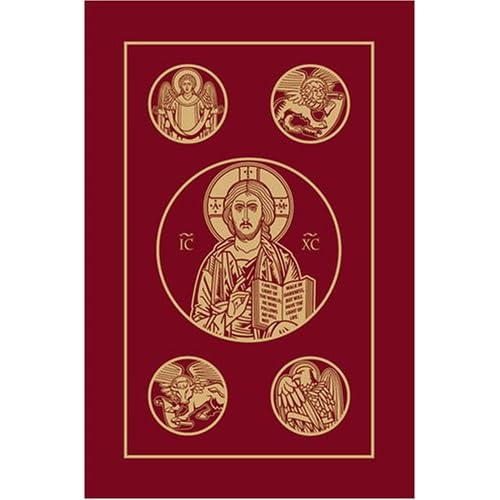
I recently realized the need to have a Catholic Bible. This is a picture of the cover of the Bible, which is the hardback version of the Ignatius Bible. A long time ago I purchased a single volume of "The Apocrypha" that was from the original KJV. It's interesting to note that mere fact, that the KJV was not bold enough to leave these works of literature untranslated, but I digress. I was irked by the lack of a book that had these books bound together. There was something symbolic about my desire to see these books in one volume, and that was to not show a sign of disdain for the books. Sure, there are volumes that contain just the New Testament and Psalms, but my inner sense of completeness told me something was wrong. I had understood that there is something missing in my view of the Bible, and this is what that something is.

In contemplating the claims of Rome another fundamental thought has occurred to me. For the books called "apocryphal" or "deuterocanonical" are not simply more books to make up the Old Testament.
At another point it may be worth discussing the literary and linguistic basis for accepting this books, but for now, I have a more philosophical notion to consider.

Many Christians have challenged the notion that Jesus is not the Messiah by arguing that God would not have left His people without a continuing temple, a continuing presence of faithful witnesses. From Adam to Moses there was not a solid line of explication of how one should live, but after that time as the kings were established we have a faithful line of prophets who wrote the things we read in the Old Testament. That is true and agreed upon by all Christians.

However, what is not agreed upon is whether there is a period of time before Christ that takes this faithful line and views it as broken. Hanging in pieces and shards, the people of God allegedly lost the growing sense of His presence for roughly 400 years. For that is what one asserts if one states that Malachi was the last prophet until John the Baptist.

And thus, the acceptance of books such as First and Second Maccabees hinges upon a parallel acceptance that this silence did not happen to God's people. At the time when the Greeks, led by Antiochus Epiphanes, ravaged the temple and land in Palestine, challenging the Jews way of life, we can assert that God was with His people to give them a comforting voice, or we can relegate this history to some grey zone of silence. As for me, the former option is the not only the one that matches the notion of a faithful God best, it also makes sense out of some interesting aspects of the New Testament. For Jesus celebrated the Feast of Dedication, which comes from that same allegedly silent period (John 10:22-23). Furthermore, Hebrews 11 lists some faithful people who suffered martyrdom that strongly evokes images from 2 Maccabees (compare Hebrews 11:35 to 2 Maccabees 7 - and keep in mind, a Presbyterian pastor convinced me of this truth roughly four years ago). Therefore, the resounding cry that comes to me from my experience and the Bible is that there could not have been a period of silence where God's people were left to languish.

The deuterocanonical books do not merely make for more reading material, they support the idea that we can rest assured that there has always been someone faithful with God's word in this world.


Extending past the silent period to today, it's interesting to note that many Protestants have a similar notion of their own day to day existence, and Church history in general. Surely there could not be a Church that has remained essentially faithful to God, because that's just not how humans operate, or so they say. Never mind the promises of Jesus to Peter about the Church being built upon a rock that the gates of hell will not prevail against (Matthew 16). As some faithful Lutheran teachers once explained to me, gates are not offensive weapons. The Church was not merely going to withstand the devil and his minions, she was to conquer and trample down the defensive gates of hell, bringing a growing sense of peace and justice to this world. We are still on that road to peace, but how do we get there? By our own opinions, or is God still speaking to us? Well, the answer depends on the person you're talking to.

The point in this context is that if it was fine for God to be silent for 400 years before Christ, there is a parallel thought that it's fine for God to be silent with the Church. We are left with an infallible Bible to be fallibly interpreted, which simple logic demands that one will have a fallible view of God.

To this, my mind cries out and says this cannot be. As I have tried to persuade you, part of this skepticism is rooted in one's view that God was silent in the past. If He was silent in the past, why be so surprised that He is silent now? But not only did He promise that the gates of hell would not prevail against the Church, Jesus went further and promised that for Him to ascend to the Father so that the Spirit would come would be even BETTER for His people (John 16:7). Far from wistfully looking to some future day with His physical reign on earth, we should take His promises and believe them. It really is better for us to have the Holy Spirit sent to us than if Jesus were physically reigning in Jerusalem (or Los Angeles). Of course, with all of the cacophonous voices screaming words "from the Lord" that contradict each other, it is hard to believe this truth, and I have much sympathy with those who do not hold on to this hope. But believe we must, or else we are all at a loss as to which voice(s) to hear, if any.

God speaks to His people. He is there, and He is not silent.

another funny science video....

Saturday, June 21, 2008

Canciónes del Día


I'm not familiar with the second song on this clip, but it's not too shabby either....

Friday, June 20, 2008

muito obrigado amalia......

Obama and "public" money-first impressions

So, as many stories on the web seem to indicate, there is more than a small amount of furor over Obama's refusal to accept "public" money.

As far as I understand, this means that there is an 85 million dollar pot of "public" funds that he is not accepting, with the trade off that he can end up raising higher amounts of money from "private" sources.

This article is one of many to point out that this is the first time a candidate has refused to take "public" money since this program was instituted after the Watergate scandal.

All I will say at this point is this: and Obama's the bad guy? I'd rather be upset about the nearly 40 years of the government telling me that part of my money needs to go to the funding of TV ads I will never watch or enjoy.

Now, I know that Obama is no conservative, and he wants to tell me what to do with my money in other arenas, but at least it's not going to annoying campaign ads (and hopefully it won't go to wars?).

McCain tried to use this as an opportunity of showing Obama contradicting himself, but seriously, is it that much of a tragedy that he'll be using 85 million less of our tax dollars? I hope I'm not alone here, but this just sounds like lunacy.

Like I said, it's my first impression, but it's the impression that I get.

Monday, June 16, 2008

The False Dichotomies of Religion vs. Relationship and Faith vs. Merits

As anyone who reads site with any modicum of frequency will surely attest, I have been thinking a lot about my life and am constructing an "apologia pro vita sua", to steal the phrase of another. But one thing that I need to say before I delve deeper into my progression of faith is probably the most ultimate matter of all, and that is how I view my relationship to Him who is ultimate. Saying that I am desirous of full communion with the Church may sound shocking, especially in light of Her portrayal by others.

What I mean is this: as a new Christian in Calvary Chapel I was told that the real gospel is not about religion but relationship. I came to see that that statement was a gross oversimplification, as other Christians such as those in the Reformed world would never deny relationship for religion's sake. Instead, it is clear that true religion, as described by the epistle of St. James, is part of the gospel. And so I came to realize that discussing all of 2000 years of theological debate as being over whether one called their religion a relationship or not was more than a waste of time-it was a way of trying to stake the unique claim that only those who threw off the "shackles" of "religion" are freely in love with Our Lord.

At the same time, in embracing this understanding that religion is not a bad word, I walked in ignorance of Catholicism. I assumed that while they too were not afraid to call themselves a religion, that was merely because they did have serious differences with God's Holy Word.

After all, serious thinkers like Martin Luther had shown that Roman Catholicism was all about denying the idea that God has come to save us, and instead they advocate religion as us ascending to God on our own works. They taught that we can gain some sort of merit that is independent of Christ. Maybe Christ is a good example to us, but in their religion it seemed as though that was all.

As I hope to tell in detail, hearing of strong evangelical Christians becoming Catholic such as Francis Beckwith and other less famous people who were no less luminary in their devotion to God, unsettled me. Others who will remain nameless simply stated that these men and women were turning to Rome out of a desperate attempt to find solid unity, and ultimately this action was a mere demonstration of their ignorance of the true Gospel. The true Gospel would never lead the child of God to boast of merit, as though Christ's death on the Cross were not sufficient. The true Gospel would always say that it was all about God saving us, not us saving ourselves.
These words were enough to make me stay away from Catholic theology and fear it.

And yet, I have come to see how all of this posturing has been just that--posturing. I had stood and stared and gawked at the Catholic church, but had not listened to her own saints as they told of what God has done in their lives. In studying their formal statements on issues such as merits, I repeatedly found myself at an impasse. Instead of hearing the caricatures of Rome that I had repeated to myself, I found a completely different confession of faith. In the section specifically on merits, part of a prayer of St. Therese of Lisieux closes the section. As I read these words and reflected on them, I realized that I could not raise a cry of objection to anyone who said such things about their faith. Just as my former frustration with all those espousing Calvinism ebbed by talking to Calvinists about their true human feeling that we all must choose this day whom we must serve (despite the seeming contradiction between this and their philosophical background), I saw the walls of resistance to Catholicism fall down by simple statements by great men and women of God who "happened" to be Catholic as well.

Below is that quotation of St. Therese of Lisieux.
A link to the full prayer is here. By the way, she is one of only three women who have received the title of Doctor of the Church.
I think this quote is enough to silence any opposition to Rome's view of merit. More importantly, it is enough to inspire the hardest heart to love Our Lord.

"After earth's exile, I hope to go and enjoy you in the fatherland, but I do not want to lay up merits for heaven. I want to work for your love alone.... In the evening of this life, I shall appear before you with empty hands, for I do not ask you, Lord, to count my works. All our justice is blemished in your eyes. I wish, then, to be clothed in your own justice and to receive from your love the eternal possession of yourself".

Sunday, June 15, 2008

For Father's Day

Last week my good friend CDH sent me an mp3 of one song off of Pinback's album that came out last year. I had heard that this band would really be enjoyable to me several years ago but due to financial constraints and the hectic nature of life I hadn't checked them out. The song, shown in the video below, compelled me to get this album with the Father's Day iTunes gift card I received. So now I give to ye, fathers and non-fathers alike, this present.

When I saw how "unbecoming" of being rock stars this band would appear (to the untrained eye), my estimation of them rose 1098028390 points!

Saturday, June 14, 2008

He died on this day 72 years ago


A Ballad of Suicide
by Gilbert Keith Chesterton

The gallows in my garden, people say,
Is new and neat and adequately tall;
I tie the noose on in a knowing way
As one that knots his necktie for a ball;
But just as all the neighbours--on the wall--
Are drawing a long breath to shout "Hurray!"
The strangest whim has seized me. . . . After all
I think I will not hang myself to-day.
To-morrow is the time I get my pay--
My uncle's sword is hanging in the hall--
I see a little cloud all pink and grey--
Perhaps the rector's mother will not call--
I fancy that I heard from Mr. Gall
That mushrooms could be cooked another way--
I never read the works of Juvenal--
I think I will not hang myself to-day.
The world will have another washing-day;
The decadents decay; the pedants pall;
And H.G. Wells has found that children play,
And Bernard Shaw discovered that they squall,
Rationalists are growing rational--
And through thick woods one finds a stream astray
So secret that the very sky seems small--
I think I will not hang myself to-day.

ENVOI
Prince, I can hear the trumpet of Germinal,
The tumbrils toiling up the terrible way;
Even to-day your royal head may fall,
I think I will not hang myself to-day.