Monday, September 7, 2009


Sunday, September 6, 2009
Wednesday, August 19, 2009
Why the first council of Nicea shows a non-Protestant view of the world (and why you should care), part III
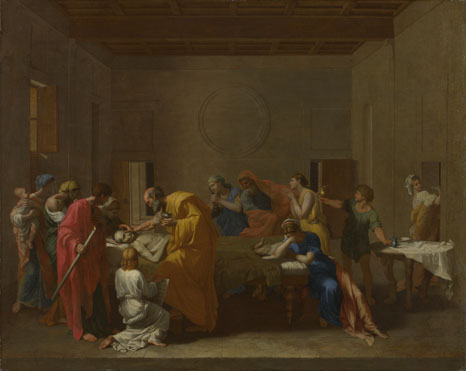
(Note: I will be adding many more comments, but am mad about my lack of productivity so am forcing myself to post this in an incomplete form. But Canon 13, oh Canon 13!)
Let's look at another Canon a lot later in the list of Canons:
Canon 13
Concerning the departing, the ancient canonical law is still to be maintained, to wit, that, if any man be at the point of death, he must not be deprived of the last and most indispensable Viaticum. But, if any one should be restored to health again who has received the communion when his life was despaired of, let him remain among those who communicate in prayers only. But in general, and in the case of any dying person whatsoever asking to receive the Eucharist, let the Bishop, after examination made, give it him.
If we are rightfully accused of believing in Magic, as some have done---if we are making more out of the Eucharist than those who consider it merely symbolic would say we are, why would the first Ecumenical council make sure that NO ONE be deprived of the Eucharist on their way out of the earth?
Monday, August 10, 2009
Why the first council of Nicea shows a non-Protestant view of the world (and why you should care), part II
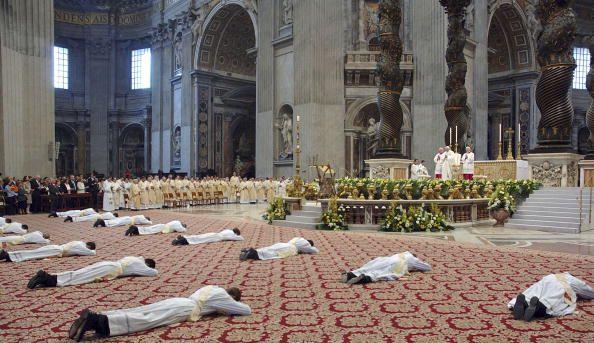
After introducing the problem in my previous post, I'd like to bring up what strikes me most about Nicea and the way that this council has a view that does not comport with Protestantism. Many Catholics have gone about this debate by centering their thoughts on some of the final clauses of the Creed, and if I have the time I may conclude by stressing that to really believe in one baptism for the remission of sins, and a Church that is One, Holy, Catholic, and Apostolic does not match the typical Protestant view of the Church, but I think that the context surrounding this Creed is even more compelling.
For you see, this council is indeed the point where Arianism was repudiated and the deity of Christ was upheld, in that great distinction which was made between homoousion (the same essence as that of the Father) and homoiousion (a similar essence as that of the Father's). But it was not merely a council that discussed this matter of who Jesus is and his relationship to the Father.
Not only was there a Creed that was written and approved at Nicea, there was also a set of Canons (or rules) about Church behavior and polity. It is these Canons about which I found myself both greatly amazed and instructed in history as I read them recently. It was so encouraging to see that my faith as a Catholic was upheld historically in the very first Council. But then, I'm getting ahead of myself, as usual.
So, the first Ecumenical Council met, and it didn't just make a Creed. It also set out to write some Canons. We can imagine a hush in that ancient hall, and what will be decreed in the First Canon? If you guessed a further condemnation of Arianism, you would be wrong. In fact, if you randomly were to guess the right answer I would ask you to go to a grocery store and buy me some lottery tickets. This first Canon at the first Council states the following:
If any one in sickness has been subjected by physicians to a surgical operation, or if he has been castrated by barbarians, let him remain among the clergy; but, if any one in sound health has castrated himself, it behooves that such an one, if [already] enrolled among the clergy, should cease [from his ministry], and that from henceforth no such person should be promoted. But, as it is evident that this is said of those who wilfully do the thing and presume to castrate themselves, so if any have been made eunuchs by barbarians, or by their masters, and should otherwise be found worthy, such men the Canon admits to the clergy.
First and foremost, I was shocked to read that this act of self-mutilation was not a random blip confined only to the life of Origen, the early Church Father who had some strange views at times.
This phenomenon was actually frequent enough that the Fathers of Nicea had to speak out against it and say that those men should not be in the ministry! If only our age erred in that realm in that area, versus the dominance that lust plays in the Church and outside of Her doors. But that's another story for another time.
Going beyond that, it really strikes me that this first Canon is considering the treatment of eunuchs and how they, if not self-mutilated, can be a member of the clergy. Why discuss this, if being a pastor "requires" that the man who is ordained must be the husband of one wife?
Instead, there is the assumption that there should be a place for men who live as celibates. And why do you think some people had castrated themselves? It's simple logic to see that some men wanted to be in ministry and could not imagine living a chaste life without this mutilation taking place. Now, many married men may think this to be so, but in the midst of all this consideration which may seem too theoretical, some simple words from Our Lord come to mind:
For there are eunuchs, which were so born from their mother's womb: and there are eunuchs, which were made eunuchs by men: and there are eunuchs, which made themselves eunuchs for the kingdom of heaven's sake. He that is able to receive it, let him receive it. (Matthew 19:12)
Now, perhaps some of our 4th century Christian friends had taken this passage literally? Maybe that's why there were some people who had castrated themselves? This may especially be true if also they took Christ's words about cutting things off that cause one to sin literally, but the point is that this Canon shows that that is not what Christ meant. To make one's self a eunuch for the Kingdom of heaven is instead an interior act of devotion to God above any earthly affections. That there would be some celibate men in the priesthood or serving as bishops/deacons/etc. is clearly presupposed by this Canon.
And yet, as I've asked many friends, I cannot find a local Evangelical or Reformed congregation where Pastor so and so has decided to live a celibate life in dedication to God. Instead, such a man would be suspect as being somewhat freakish. Even an unmarried pastor who has the intention of finding a godly wife is suspect. I'm not saying that all priests should be celibate (and indeed, there are married priests in Eastern Catholic and Eastern Orthodox Churches, as well as some rare exceptions to the rule when Anglican priests and others convert to Roman Catholicism), but the more I have considered this canon, the more it has been clear that a significant portion of men in the ministry were celibate.
The first Canon of Nicea takes it for granted that there are these men who are eunuchs for the sake of God, and welcomes those men who have been mutilated by others into the ministry. That just sounds far too Catholic for my former Protestant ears. Am I alone?
At this point you may be asking, "So what? So what if this council was completely different in its thinking from my way of thinking?"
The significance of this issue includes these facts:
1) If the Protestant view is right and the view of Nicea is wrong, that means that the Church was already corrupt in its first big meeting after the Scriptures were written.
2) This writing goes presupposes a view held by Catholics and Orthodox, who also stress their connection to the Apostles in terms of apostolic succession.
3) It raises the question of why this issue of celibacy even seems strange, given the passage in the Gospel mentioned above.
Or maybe you're hoping that this dissonance between Protestant thinking and Nicene thinking as seen in Canon I isn't really that big of a deal, and this first canon is just an aberration. As my next post will show, the lack of harmony between the Christian community of 325 and its Protestant counterparts today cuts even deeper than this issue of celibacy.
Saturday, August 8, 2009
Why the first council of Nicea shows a non-Protestant view of the world (and why you should care), part I

Various online and in person debates have led me to think about the idea that the perspective of the Apostolic Churches, both Western and Eastern, is not anachronistic in looking to the first Christians who lived after the Apostles, and seeing a similar tune being sung by them. We are told by our Protestant friends that if we would just look at the really early Church, then all of our distinctives such as Apostolic Succession, the office of a bishop who can ordain people in parishes where he is not the pastor, an almost magical view of the sacraments, and the like, are contrivances that aren't in Nicea, but are in places like Trent. But is that true?
The Nicean Creed is something affirmed by all Trinitarian Christians (to my knowledge, at least), and this council is supposedly from a time when doctrine had not developed to the point where Protestants would take exception. Or so it would seem. Even though as a Presbyterian we would often recite these words, for various reasons I would argue that this council is not fair game for all Christians.
For now, here is the text of the Creed, as said by some Eastern Christians:
I believe in one God, the Father Almighty, Creator of heaven and earth, of all things visible and invisible.
And in one Lord Jesus Christ, Son of God, the only-begotten, born of the Father before all ages.
Light of light, true God of true God, begotten, not made, of one substance with the Father, through whom all things were made.
Who for us men and for our salvation, came down from heaven, and was incarnate from the Holy Spirit and Mary the Virgin, and became man.
He was also crucified for us under Pontius Pilate, and suffered and was buried.
And He rose again on the third day, according to the scriptures.
And He ascended into heaven, and sits at the right hand of the Father.
And He will come again with glory, to judge the living and the dead, and of His kingdom there will be no end.
And in the Holy Spirit, the Lord, and Giver of life, who proceeds from the Father, who together with the Father and the Son is worshipped and glorified, Who spoke through the prophets.
In one, holy, catholic and apostolic Church.
I profess one baptism for the remission of sins.
I expect the resurrection of the dead; and the life of the world to come.
Amen.
AMEN....
Wednesday, August 5, 2009
In Honor of Some Upcoming Weddings
"The principle is this: that in everything worth having, even in every pleasure, there is a point of pain or tedium that must be survived, so that the pleasure may revive and endure. The joy of battle comes after the first fear of death; the joy of reading Virgil comes after the bore of learning him; the glow of the sea-bather comes after the icy shock of the sea bath; and the success of marriage comes after the failure of the honeymoon. All human vows, laws, and contracts are so many ways of surviving with success this breaking point, this instant of potential surrender.
In everything on this earth that is worth doing, there is a stage when no one would do it, except for necessity or honor. It is then that the Institution upholds a man and helps him on to the firmer ground ahead. Whether this solid fact of human nature is sufficient to justify the sublime dedication of Christian marriage is quite another matter, it is amply sufficient to justify the general human feeling of marriage as a fixed thing, dissolution of which is a fault or, at least, an ignominy. The essential element is not so much duration as security. Two people must be tied together in order to do themselves justice; for twenty minutes at a dance, or for twenty years in a marriage. In both cases the point is, that if a man is bored in the first five minutes he must go on and force himself to be happy. Coercion is a kind of encouragement; and anarchy (or what some call liberty) is essentially oppressive, because it is equally discouraging. If we all floated in the air like bubbles, free to drift anywhere at any instant, the practical result would be that no one would have the courage to begin a conversation. It would be so embarrassing to start a sentence in a friendly whisper, and then have to shout the last half of it because the other party was floating away into the free and formless ether. The two must hold each other and do justice to each other. If Americans can be divorced for "incompatibility of temper" I cannot conceive why they are not all divorced. I have known many happy marriages, but never a compatible one. The whole aim of marriage is to fight through and survive the instant when incompatibility becomes unquestionable. For a man and a woman, as such, are incompatible."
G.K. Chesterton
In everything on this earth that is worth doing, there is a stage when no one would do it, except for necessity or honor. It is then that the Institution upholds a man and helps him on to the firmer ground ahead. Whether this solid fact of human nature is sufficient to justify the sublime dedication of Christian marriage is quite another matter, it is amply sufficient to justify the general human feeling of marriage as a fixed thing, dissolution of which is a fault or, at least, an ignominy. The essential element is not so much duration as security. Two people must be tied together in order to do themselves justice; for twenty minutes at a dance, or for twenty years in a marriage. In both cases the point is, that if a man is bored in the first five minutes he must go on and force himself to be happy. Coercion is a kind of encouragement; and anarchy (or what some call liberty) is essentially oppressive, because it is equally discouraging. If we all floated in the air like bubbles, free to drift anywhere at any instant, the practical result would be that no one would have the courage to begin a conversation. It would be so embarrassing to start a sentence in a friendly whisper, and then have to shout the last half of it because the other party was floating away into the free and formless ether. The two must hold each other and do justice to each other. If Americans can be divorced for "incompatibility of temper" I cannot conceive why they are not all divorced. I have known many happy marriages, but never a compatible one. The whole aim of marriage is to fight through and survive the instant when incompatibility becomes unquestionable. For a man and a woman, as such, are incompatible."
G.K. Chesterton
Saturday, July 25, 2009
Two quotes about the Sun
"The morbid logician seeks to make everything lucid, and succeeds in making everything mysterious. The mystic allows one thing to be mysterious, and everything else becomes lucid. The determinist makes the theory of causation quite clear, and then finds that he cannot say "if you please" to the housemaid. The Christian permits free will to remain a sacred mystery; but because of this his relations with the housemaid become of a sparkling and crystal clearness. He puts the seed of dogma in a central darkness; but it branches forth in all directions with abounding natural health. As we have taken the circle as the symbol of reason and madness, we may very well take the cross as the symbol at once of mystery and of health. Buddhism is centripetal, but Christianity is centrifugal: it breaks out. For the circle is perfect and infinite in its nature; but it is fixed for ever in its size; it can never be larger or smaller. But the cross, though it has at its heart a collision and a contradiction, can extend its four arms for ever without altering its shape. Because it has a paradox in its centre it can grow without changing. The circle returns upon itself and is bound. The cross opens its arms to the four winds; it is a signpost for free travellers.
Symbols alone are of even a cloudy value in speaking of this deep matter; and another symbol from physical nature will express sufficiently well the real place of mysticism before mankind. The one created thing which we cannot look at is the one thing in the light of which we look at everything -- Like the sun at noonday, mysticism explains everything else by the blaze of its own victorious invisibility -- Detached intellectualism is (in the exact sense of a popular phrase) all moonshine; for it is light without heat, and it is secondary light, reflected from a dead world. But the Greeks were right when they made Apollo the god both of imagination and of sanity; for he was both the patron of poetry and the patron of healing. Of necessary dogmas and a special creed I shall speak later. But that transcendentalism by which all men live has primarily much the position of the sun in the sky. We are conscious of it as of a kind of splendid confusion; it is something both shining and shapeless, at once a blaze and a blur. But the circle of the moon is as clear and unmistakable, as recurrent and inevitable, as the circle of Euclid on a blackboard. For the moon is utterly reasonable; and the moon is the mother of lunatics and has given to them all her name." - G.K. Chesterton

"How can a soul so imperfect as mine aspire to the plenitude of
Love? What is the key of this mystery? O my only Friend, why dost
Thou not reserve these infinite longings to lofty souls, to the
eagles that soar in the heights? Alas! I am but a poor little
unfledged bird. I am not an eagle, I have but the eagle's eyes and
heart! Yet, notwithstanding my exceeding littleless, I dare to
gaze upon the Divine Sun of Love, and I burn to dart upwards unto
Him! I would fly, I would imitate the eagles; but all that I can
do is to lift up my little wings--it is beyond my feeble power to
soar. What is to become of me? Must I die of sorrow because of my
helplessness? Oh, no! I will not even grieve. With daring
self-abandonment there will I remain until death, my gaze fixed
upon that Divine Sun. Nothing shall affright me, nor wind nor
rain. And should impenetrable clouds conceal the Orb of Love, and
should I seem to believe that beyond this life there is darkness
only, that would be the hour of perfect joy, the hour in which to
push my confidence to its uttermost bounds. I should not dare to
detach my gaze, well knowing that beyond the dark clouds the sweet
Sun still shines.
So far, O my God, I understand Thy Love for me. But Thou knowest
how often I forget this, my only care. I stray from Thy side, and
my scarcely fledged wings become draggled in the muddy pools of
earth; then I lament "like a young swallow,"[19] and my lament
tells Thee all, and I remember, O Infinite Mercy! that "Thou didst
not come to call the just, but sinners."[20]
Yet shouldst Thou still be deaf to the plaintive cries of Thy
feeble creature, shouldst Thou still be veiled, then I am content
to remain benumbed with cold, my wings bedraggled, and once more I
rejoice in this well-deserved suffering.
O Sun, my only Love, I am happy to feel myself so small, so frail
in Thy sunshine, and I am in peace . . . I know that all the
eagles of Thy Celestial Court have pity on me, they guard and
defend me, they put to flight the vultures--the demons that fain
would devour me. I fear them not, these demons, I am not destined
to be their prey, but the prey of the Divine Eagle.
O Eternal Word! O my Saviour! Thou art the Divine Eagle Whom I
love--Who lurest me. Thou Who, descending to this land of exile,
didst will to suffer and to die, in order to bear away the souls
of men and plunge them into the very heart of the Blessed
Trinity--Love's Eternal Home! Thou Who, reascending into
inaccessible light, dost still remain concealed here in our vale
of tears under the snow-white semblance of the Host, and this, to
nourish me with Thine own substance! O Jesus! forgive me if I tell
Thee that Thy Love reacheth even unto folly. And in face of this
folly, what wilt Thou, but that my heart leap up to Thee? How
could my trust have any limits?" - St. Therese of Lisieux

Symbols alone are of even a cloudy value in speaking of this deep matter; and another symbol from physical nature will express sufficiently well the real place of mysticism before mankind. The one created thing which we cannot look at is the one thing in the light of which we look at everything -- Like the sun at noonday, mysticism explains everything else by the blaze of its own victorious invisibility -- Detached intellectualism is (in the exact sense of a popular phrase) all moonshine; for it is light without heat, and it is secondary light, reflected from a dead world. But the Greeks were right when they made Apollo the god both of imagination and of sanity; for he was both the patron of poetry and the patron of healing. Of necessary dogmas and a special creed I shall speak later. But that transcendentalism by which all men live has primarily much the position of the sun in the sky. We are conscious of it as of a kind of splendid confusion; it is something both shining and shapeless, at once a blaze and a blur. But the circle of the moon is as clear and unmistakable, as recurrent and inevitable, as the circle of Euclid on a blackboard. For the moon is utterly reasonable; and the moon is the mother of lunatics and has given to them all her name." - G.K. Chesterton

"How can a soul so imperfect as mine aspire to the plenitude of
Love? What is the key of this mystery? O my only Friend, why dost
Thou not reserve these infinite longings to lofty souls, to the
eagles that soar in the heights? Alas! I am but a poor little
unfledged bird. I am not an eagle, I have but the eagle's eyes and
heart! Yet, notwithstanding my exceeding littleless, I dare to
gaze upon the Divine Sun of Love, and I burn to dart upwards unto
Him! I would fly, I would imitate the eagles; but all that I can
do is to lift up my little wings--it is beyond my feeble power to
soar. What is to become of me? Must I die of sorrow because of my
helplessness? Oh, no! I will not even grieve. With daring
self-abandonment there will I remain until death, my gaze fixed
upon that Divine Sun. Nothing shall affright me, nor wind nor
rain. And should impenetrable clouds conceal the Orb of Love, and
should I seem to believe that beyond this life there is darkness
only, that would be the hour of perfect joy, the hour in which to
push my confidence to its uttermost bounds. I should not dare to
detach my gaze, well knowing that beyond the dark clouds the sweet
Sun still shines.
So far, O my God, I understand Thy Love for me. But Thou knowest
how often I forget this, my only care. I stray from Thy side, and
my scarcely fledged wings become draggled in the muddy pools of
earth; then I lament "like a young swallow,"[19] and my lament
tells Thee all, and I remember, O Infinite Mercy! that "Thou didst
not come to call the just, but sinners."[20]
Yet shouldst Thou still be deaf to the plaintive cries of Thy
feeble creature, shouldst Thou still be veiled, then I am content
to remain benumbed with cold, my wings bedraggled, and once more I
rejoice in this well-deserved suffering.
O Sun, my only Love, I am happy to feel myself so small, so frail
in Thy sunshine, and I am in peace . . . I know that all the
eagles of Thy Celestial Court have pity on me, they guard and
defend me, they put to flight the vultures--the demons that fain
would devour me. I fear them not, these demons, I am not destined
to be their prey, but the prey of the Divine Eagle.
O Eternal Word! O my Saviour! Thou art the Divine Eagle Whom I
love--Who lurest me. Thou Who, descending to this land of exile,
didst will to suffer and to die, in order to bear away the souls
of men and plunge them into the very heart of the Blessed
Trinity--Love's Eternal Home! Thou Who, reascending into
inaccessible light, dost still remain concealed here in our vale
of tears under the snow-white semblance of the Host, and this, to
nourish me with Thine own substance! O Jesus! forgive me if I tell
Thee that Thy Love reacheth even unto folly. And in face of this
folly, what wilt Thou, but that my heart leap up to Thee? How
could my trust have any limits?" - St. Therese of Lisieux

Thursday, July 23, 2009
Sunday, July 19, 2009
Friday, July 17, 2009
The Joy of Drinking
Read it here.
This thought is especially interesting.
"Good drinking is not a flight from reality–the good drinker is acutely aware of the realities surrounding him. Indeed, this awareness is the key to understanding good drinking. Although there are periodic exceptions, life is generally good because earthly existence is a gift of God. This fact is clouded by the grinding troubles of everyday life. But most of these troubles are not troubles at all–they are merely worries stemming from ambitions, ambitions triggered by the self’s pursuit of gratification, a pursuit that causes us to feel harried throughout the workday, to struggle to earn more money than we really need, to dwell on petty things that are beneath our status as creatures made in God’s image."
This thought is especially interesting.
"Good drinking is not a flight from reality–the good drinker is acutely aware of the realities surrounding him. Indeed, this awareness is the key to understanding good drinking. Although there are periodic exceptions, life is generally good because earthly existence is a gift of God. This fact is clouded by the grinding troubles of everyday life. But most of these troubles are not troubles at all–they are merely worries stemming from ambitions, ambitions triggered by the self’s pursuit of gratification, a pursuit that causes us to feel harried throughout the workday, to struggle to earn more money than we really need, to dwell on petty things that are beneath our status as creatures made in God’s image."
Saturday, June 20, 2009
I just blogged Two Hundred and Thirty-eight Times
How, do you ask? I took some older posts which were previously on "The Mathoms" and the now less than apt blog entitled "Contrarian Presbyterian" and restored them here. Some may be ones which make me blush, but I realize they were written by me and there were some important things said there. So if you feel like going back in time/taking a trip down odd memory lane, you know where to go....
Monday, June 8, 2009
scientific proof of God

People request scientific proof of God, and yet we never ask for scientific proof for love.
He who calls Himself love should be viewed with the same straining (or unstraining, longing, loving) gaze that would mock the call for scientific proof of such postulates and hypotheses such as the one which posits that my daughter is precious to me. If God is love and love is not proven scientifically, something is seriously awry when we try to offer scientific proof of God. The same is true for the skeptic, who wants to show God does not exist through the same faulty and inappropriate tools.
And yet so many defenders of God and His detractors hold up the rubric of proving God by empiricism and quantification, and they wonder why they end up with dust in their eyes and friendships torn apart as a result. More confusion than light comes from these types of arguments.
In fact, I take it back---it's not that we never ask for scientific proof for love. If only that were the case. Serious problems arise all the time, and if you look at divorce rates it seems they are growing exponentially. They come about when we ask for that scientific proof in the realm of love. Love is not quantified. Further, our sample size is construed in a biased fashion. We think in such a short termed manner that we end up denying love's truth in places where love is truly there. The short term drowns the more permanent messages. We lose context.
We are all too often operating as though science were the proof of love (and everything). And when we come home to the messy home, or we see our love in their tiredness utter a rash word, our microscopic view of the trees loses the forest that may not be as rotten as the stump that crossed our path at this point in our sojourn.
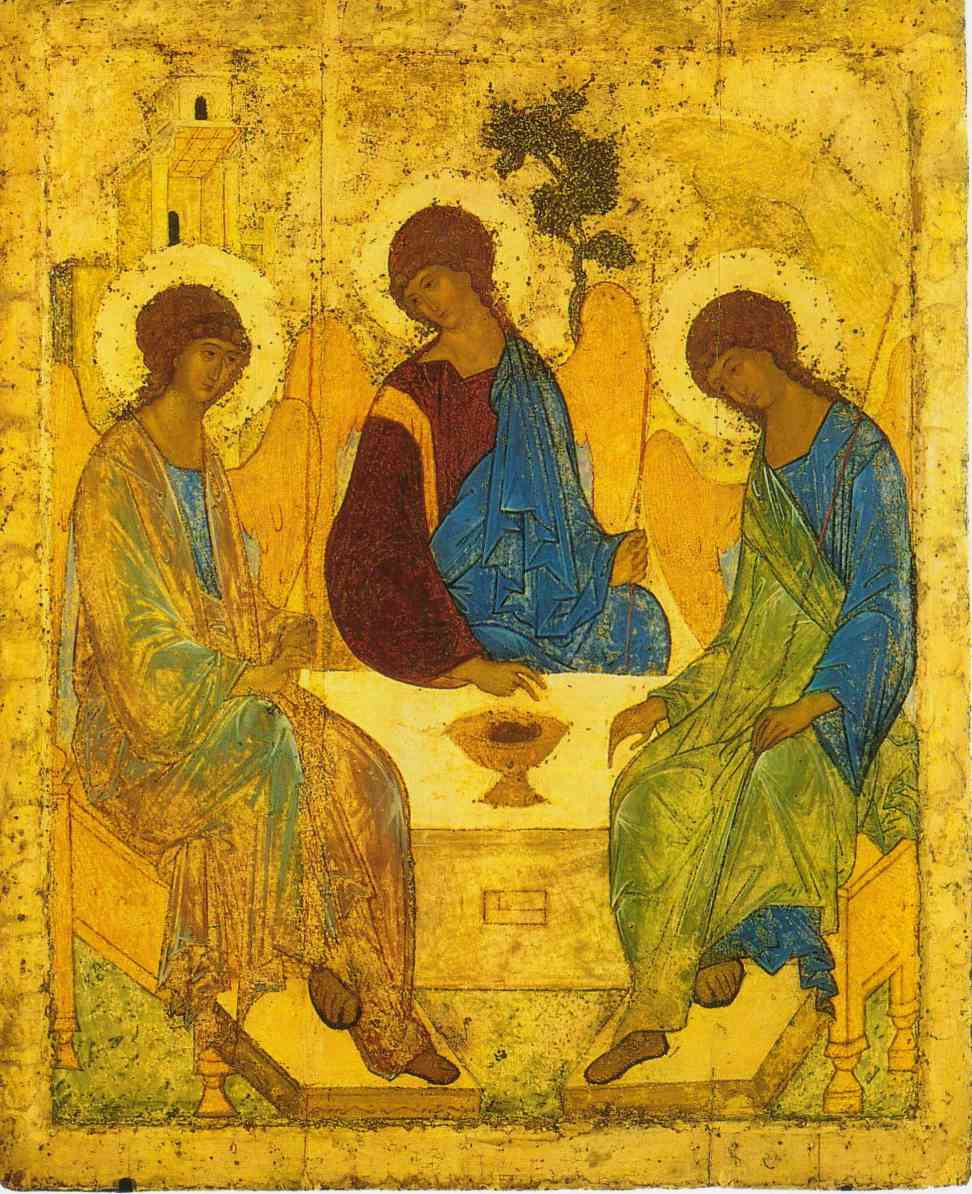
We must put an end to all scientific quests for love, and begin the relational experience of the people who love us. Let's not learn about how much someone does or does not love us. Let's love and be loved. There are Three who come to mind as a good starting point. But yes, I know, so many are afraid of that journey. Begin where you can, and do not hesitate to progress as mercy opens His doors your way, whether through Himself or in any corner of His amazing world of love and hospitality.
Friday, May 29, 2009
Trust This Church?

From the Introduction to a book entitled Light and Shadows: Church History amid Faith, Fact and Legend by Father Walter Brandmüller (I found it here), we have this question about trusting the Church.
To me this is the quintessential question---if the Church that was founded by the Apostles and their successors was given a gift whereby her fidelity was maintained, nothing can really stand in the way from joining her. But that is a big "if", and people have big questions. It sounds like Father Brandmüller makes some interesting arguments that I hope and pray will go towards convincing people that this act of trust is worth making.
This introduction makes me wish I could afford another book to my collection--then again, my birthday is in ~3 months....hm.....
Occasionally the Church is compared with Noah's ark: only his sons and daughters, only those animals that Noah took with him into the ark were saved from the great flood. In a similar way, the Church is supposed to be man's only rescue from the final catastrophe.
When discussion turns to the Last Things, to man's eternal fate, then the question assumes the utmost urgency: To whom can he entrust his eternal fate and himself? What can he rely on in life and death? Now, since the Church makes the exclusive claim to be the saving ark, this claim must be so solidly established that it does not mean a leap into uncertainty when man puts his trust in this ark.
Questions About Questions
To many of our contemporaries, such trust in the Church appears to be nothing less than an unreasonable demand upon sound common sense. Aren't there countless facts (the objection goes) that demolish the credibility of the Church?
Many people have read the numerous books or seen the television programs that deal with the subject of the Qumran community and seem to offer proof that the beginnings of Jesus of Nazareth and of Christianity ought to be portrayed in a completely different way from what is recorded in the Gospels and the rest of the New Testament. Many have also seen the earthenware receptacle containing human remains that was found in Jerusalem, on which the names Joseph, Mary and Jesus were inscribed. Isn't this compelling evidence that Jesus did not rise bodily from the dead and that Mary was not taken body and soul into heaven? With that, however, the foundations of the Christian faith crumble into dust and ashes! Many people today suspect that this is so.
Furthermore, the Church—as they say—through clumsy errors made by her official teaching authority on numerous occasions, has repudiated her claim to hold the truth infallibly. Let us listen to Hans Küng, who lists the "classic errors of the Church's Magisterium, most of which have been admitted". First he mentions the "excommunication of the Ecumenical Patriarch of Constantinople, Photius, and of the Greek [Byzantine] Church, which formalized the soon-to-be millennial schism with the Eastern Church". Then Küng adduces "the prohibition against charging interest [on loans] at the beginning of the modern era, whereby the Church's Magisterium changed its opinion much too late, after various compromises". Then (what else could you expect?) he also cites the trial of Galileo in 1616 or else in 1633 and other things of this sort. The most recent major error of the Magisterium, in his view, is its rejection of artificial contraception.
Others before and after him have pilloried the Church on account of the Crusades, the Inquisition and the witch trials, and anyone who is still not satisfied is referred to the financial scandal of the Vatican Bank and the murder conspiracy against Pope John Paul I, who was so likeable: Mafia in the Vatican, at the heart of the Church. From another corner the cry is that a power-hungry clique of Freemasons already replaced Paul VI with a double whom they could control and that the Lodge in general seized power in the Vatican long ago—and so on. Therefore, who can still trust such a Church?
If you are really going to ask the critical question about reliability, however, then direct it not only at the Church but also at the objections that are raised against her.
Justified Criticism?
The Qumran Theme
The most popular books about Qumran, The Dead Sea Scrolls Deception by Baigent and Leigh, and Jesus und die Urchristen [Jesus and the Early Christians] by Eisenmann, as well as other comparable publications on this topic, have been exposed by serious researchers as clumsy concoctions. The books are partly the result of scientific incompetence; to some extent they are based on deliberate, malicious falsification of the facts. It is precisely the archaeological findings at Qumran that, quite to the contrary. shed an extremely interesting light on the New Testament and even clear up riddles. And as for the ossuary with the names of Joseph, Mary and Jesus [Joshua], which actually comes from Jerusalem and dates back to the time of Jesus, the names mean nothing at all, when you consider that they were as common and therefore as insignificant as the names Miller, Fields and Smith would be today.
Similarly, with regard to Hans Küng's "errors" of the Church's Magisterium, we are dealing more with the errors of Hans Küng than with those of the Church. First of all, in page after page, he confuses Patriarch Photius with Patriarch Michael Cerullarius. Then Küng fails to mention that Photius was excommunicated because he had become Patriarch in an unlawful manner and furthermore had accused Rome of heresy and had tried to depose Pope Nicholas I by means of a manipulated synod. Depending on how one views the particular historical circumstances of this case, one could possibly speak about a wrong decision in ecclesiastical politics or an unjust excommunication, but never about an error of the Church's Magisterium.
The same is true for the prohibition against lending at interest and its gradual abolition by the Church. This prohibition against charging interest was based on the Old Testament and had been confirmed by popes and councils. Why this was so becomes clear when you consider that in antiquity and in the medieval world, charging interest was most often identical to usury. Lending at interest lost this sinful character, however, with the transformation of commercial structures in the late Middle Ages. Thus the reason for the prohibition against charging interest became moot over the course of time, and from then on the only concern was with the question of determining the just rate of interest. The general prohibition had thereby become null and void. So where in all this is there an error of the Church's Magisterium?
The condemnation of Galileo's teaching about the fixed position of the sun and the movement of the earth, which is also so often described as an error of the Church's Magisterium, proves upon closer inspection to have been justified at the time. With the scientific methods at his disposal, Galileo could not offer a proof that would convince the specialists either of his day or of ours that that is really the case, nor could he explain, before the discovery of gravity by Isaac Newton, how the earth could possibly revolve at breakneck speed around the sun and around its own axis while at the same time nothing of the sort is perceived by us, since everything on earth stands firm and secure instead of being tossed about in a tumultuous whirl. Most importantly, though, the whole legal proceeding against Copernicus and Galileo resulted in not one single magisterial statement that could have been described as a dogma and on that account would have been irrevocable. In this case, too, the critics fail to take into consideration the many events and facts in intellectual, cultural and scientific history that explain this decision. Furthermore, the most recent scientific findings vindicate the Church of 1633.
A comparably nuanced, careful and comprehensive approach should be taken to the problems connected with the touchy subjects of the Crusades, the Inquisition and the witch trials. In light of recent findings and the latest research, these subjects prove to be many-layered and much more complicated than the superficial observations oft hose who look at them as a source of ammunition against the Church. Moreover, anyone who has even the foggiest notion of the complexity of Financial-political activities and their worldwide interconnections and knows, furthermore, what sort of possibilities they offer for manipulation, will assume that the aforementioned Vatican financial scandal resulted from excessive gullibility or perhaps incompetence or even frivolity in financial matters on the part of the ecclesiastical authorities rather than from criminal intrigues.
As for an opinion of Yallop's book, In God's Name, which maintains that John Paul I was murdered, it is enough to read the first thirty pages in order to pass judgment. On these pages there is talk about the popes of the nineteenth century, and so much of it is false that it is hard to imagine that the author used even an encyclopedia—for that would have sufficed to prevent the numerous errors. If Yallop does not report correctly what everyone can easily find out, how are we supposed to be able to believe him when he cites conversations and events for which, by the very nature of the matter, there can be no witnesses except those who were supposedly involved? No doubt, nothing more should be said about the double of Paul VI and other such luxuriant outgrowths of overheated imaginations.
All these things and many others besides are alleged in order to shake confidence in the Church. As we have shown in these all-too-brief remarks, however, in all these cases that supposedly vitiate the Church, historical and theological knowledge about the subject is enough to prove that such accusations are groundless.
But What About the Moral Failings?
One can with good reason retort that the most extensive knowledge about a subject of this kind will not suffice to excuse the religious and moral failings of important members of the Church throughout the centuries and in every locality, down to the papal adulterer Alexander VI. But then the question arises, on what do we actually base the trust that we place in the Church?
The real basis for our trust can never be a splendid spiritual, moral and religious manifestation of the Church in this world. This has existed and indeed does exist always and everywhere—but one likewise finds always and everywhere the much more conspicuous opposite. Thus all romanticism about the early Church, a romanticism that imagines it sees in the first generations of Christians nothing but holiness and greatness, necessarily runs aground on the hard facts: the Christian married couple Ananias and Sapphira tried to defraud the Apostle Peter; in Paul's congregation at Corinth, there was a case of incest and rebellion against the Apostle; in Philippi, Saint Paul's committed female co-workers Euodia and Symyche quarreled with each other so much that Paul had to give them a serious warning. Indeed, Paul himself parted with Mark and Barnabas during one of his journeys due to differences of opinion that were evidently insuperable. Finally, as early as the year 70, according to the latest research, there was an uprising in Corinth against the priests, such that the Bishop of Rome had to intervene forcefully.
Thus the Church has never had that spotlessly radiant appearance that she ought to have. So it is no wonder, either, that those who believed that they were especially devout were scandalized again and again by this and founded their own "church of the blameless". In contrast, the Church has always shown herself to be a great realist who has always and everywhere reckoned with the failure of her members. Not for nothing did the Lord Jesus himself, who searches and knows the depths of the human heart, institute the sacrament for the forgiveness of sins.
It cannot be said, either, that the shepherds and members of the Church have always and everywhere reacted correctly to the chal1enges of history. On the contrary, many mistakes have been made that subsequently became notorious. For example, was not it disastrous that Pope Clement V allowed himself to be intimidated by the demands of the French king Philip and abandoned the order of Knights Templar, who as a whole were certainly innocent, to a downfall that was in large pare bloody? Entire episcopates—today we would say bishops' conferences—fell into heresy during the Arian crisis of the fourth and fifth centuries. In the sixteenth century the bishops of England, with the exception of Saint John Fisher, followed King Henry Vlll into schism our of weakness and cowardice, and similarly the French episcopate, during the conflict over the freedom of the Church from the state, stood beside Louis XIV against the pope. For almost two centuries the French bishops promoted the heresy of Jansenism. There were not many exceptions, And how did the German bishops conduct themselves during the eleventh- and twelfth-century Investiture Controversy? In 1080 a majority of the German bishops, under the influence of Emperor Henry IV, made an attempt at a synod in Brixen to depose Pope Gregory VII and to elect an antipope. Those German bishops who found themselves confronted with the religious division of the sixteenth century no doubt failed in large measure, too.
Truly, all of this does not make for glorious pages in the ecclesiastical chronicles. In the end, therefore, we cannot place our trust in the wisdom and power of the shepherds, either. No promise was ever made to the Church that her shepherds and her faithful would be irreproachable or capable. What her Founder, the God-man Jesus Christ, did guarantee, nevertheless , is that she will continue unshakably and stand fast immovably in the truth until his return at the end of time. This means that the Church can never proclaim an error in matters of faith whenever she speaks in a form that is ultimately binding; that her sacraments always produce their characteristic effects of grace, provided that they are administered according to the Church's directions; and that her hierarchical-sacramental structure comprising the ministries of primacy, episcopacy and priesthood will always be maintain ed intact. Precisely thereby it is guaranteed that the graces of redemption will continue to be available to the people of all generations, until the Lord comes again.
Thursday, May 28, 2009
the abstract and concrete can do the same
David Bazan is one of my favorite songwriters from this generation. This meaning, the one where I found myself living some 31 years ago (or so).
Probably my favorite Bazan song of all time is this one, which as I mentioned on a previous post, he apparently won't play any more.
The Secret of the Easy Yoke has such simple words that were so true to life of my experience as an evangelical, and they have their own resonance with my experience as a Reformed Presbyterian and my current experience as a Catholic.
For the past several months, I have thought a lot about Bazan's sojourns in doubt, and am eagerly anticipating his next full length album, which I have had the privilege to see performed on two occasions in small house gatherings.
And while his newer songs have interesting thoughts about doubt and damnation, I keep coming back to this song which is now over 10 years old.
One line reverberates in my skull, and it is this:
"the devoted were wearing bracelets to remind them why they came,
some concrete motivation when the abstract could not do the same,
but if all that's left is duty i'm falling on my sword,
at least then i would not serve an unseen distant lord."
The more I think about it the more I am convinced that part of Bazan's problem (and the problem that we all face) with keeping his faith secure is this mentality that the concrete and the abstract are at war with one another.
We are all concrete people with abstract convictions, not mere ideas or concepts of people. Who are we to shun a world where one's abstract convictions are bolstered by one's concrete experience? And who would we be to have our concrete duties and actions regulated by the abstract?
To deny this interweaving relationship is to deny our own complexity.
Now, whether bracelets are the best form of concrete motivation or not, that is another question for another time....
Probably my favorite Bazan song of all time is this one, which as I mentioned on a previous post, he apparently won't play any more.
The Secret of the Easy Yoke has such simple words that were so true to life of my experience as an evangelical, and they have their own resonance with my experience as a Reformed Presbyterian and my current experience as a Catholic.
i could hear the church bells ringing
they pealed aloud your praise
the members faces were smiling
with their hands out stretched to shake
it's true they did not move me
my heart was hard and tired
their perfect fire annoyed me
i could not find you anywhere
could someone please tell me the story
of sinners ransomed from the fall
i still have never seen you
and some days i don't love you at all
the devoted were wearing bracelets
to remind them why they came
some concrete motivation
when the abstract could not do the same
but if all that's left is duty
i'm falling on my sword
at least then i would not serve
an unseen distant lord
if this is only a test
i hope that i'm passing
cause i'm losing steam
and i still want to trust you
peace be still
For the past several months, I have thought a lot about Bazan's sojourns in doubt, and am eagerly anticipating his next full length album, which I have had the privilege to see performed on two occasions in small house gatherings.
And while his newer songs have interesting thoughts about doubt and damnation, I keep coming back to this song which is now over 10 years old.
One line reverberates in my skull, and it is this:
"the devoted were wearing bracelets to remind them why they came,
some concrete motivation when the abstract could not do the same,
but if all that's left is duty i'm falling on my sword,
at least then i would not serve an unseen distant lord."
The more I think about it the more I am convinced that part of Bazan's problem (and the problem that we all face) with keeping his faith secure is this mentality that the concrete and the abstract are at war with one another.
We are all concrete people with abstract convictions, not mere ideas or concepts of people. Who are we to shun a world where one's abstract convictions are bolstered by one's concrete experience? And who would we be to have our concrete duties and actions regulated by the abstract?
To deny this interweaving relationship is to deny our own complexity.
Now, whether bracelets are the best form of concrete motivation or not, that is another question for another time....
Thursday, May 21, 2009
on plastic dolls and plastic hammers

We have all seen or experienced that familiar scene--a young child acting as though they were all grown up.
This image of our humanity's finitude in light of the ideal that is divinity Himself is especially poignant in my own life for many reasons, but chief on my mind at the moment is watching my beloved daughter. It is absolutely jaw-dropping, inspiring stuff to see a baby girl of almost thirteen months adopt the role of mother with her doll with the zeal of an actual mother. And it reminds me of my feebleness as one who is "actually" a father. I am humbled and in awe at the fact that I have been given these children who are mine to raise, and I am reminded that at the end of the day, all of our efforts to be good people are really approximations of who God is. And despite our coming short, I am prone to thinking that God looks at us, just as I look at my daughter with her doll, or my sons with their tools. Is their actual child raising or craftmanship amazing? No. But their hearts, oh their precious hearts. They are attuned to their calling at life to be someone who makes something of this life.
I know that our Blessed Lord must look at us and see all of the ways that we have made a mess and confusion of this life that we live, but if we are carrying our own dolls and hammers about with the joy, faith, hope, and love of those children, we'll end up all right in the end. At least, that's my hope for us all....
Monday, May 11, 2009
Friday, May 8, 2009
The Grandeur of Covenant Theology
Another post on the same site, this one was much more work for me....read it here.
Thursday, May 7, 2009
Tuesday, May 5, 2009
faith vs. ?
Many would set Rome apart from the other Western Christians by saying it's a matter of faith vs. works.
Well, yes and no.
In meditating on many writers and philosophers and average Joe's, I've come to see that it is not about "works".
It's more a matter of saying that we are saved by faith, hope and love.
And when the world is distilled to such a simple view where prayers are not counted or tallied, and instead love and hope are joined hand in hand with faith, I cannot help but ask......how can you object to such a view of the world?
It's a view where these words make sense:
The same could be said about these words, which look at the world from the "glass is half empty" viewpoint:

Well, yes and no.
In meditating on many writers and philosophers and average Joe's, I've come to see that it is not about "works".
It's more a matter of saying that we are saved by faith, hope and love.
And when the world is distilled to such a simple view where prayers are not counted or tallied, and instead love and hope are joined hand in hand with faith, I cannot help but ask......how can you object to such a view of the world?
It's a view where these words make sense:
For in Christ Jesus neither circumcision nor uncircumcision counts for anything, but only faith working through love. Galatians 5:6
The same could be said about these words, which look at the world from the "glass is half empty" viewpoint:
....if I have all faith, so as to remove mountains, but have not love, I am nothing. 1 Corinthians 13:2b

Saturday, May 2, 2009
On the incarnation of the Word

From a discourse by Saint Athanasius (295-373 AD), bishop
The Word of God, incorporeal, incorruptible and immaterial, entered our world. Yet it was not as if he had been remote from it up to that time. For there is no part of the world that was ever without his presence; together with his Father, he continually filled all things and places.
Out of his loving-kindness for us he came to us, and we see this in the way he revealed himself openly to us. Taking pity on mankind’s weakness, and moved by our corruption, he could not stand aside and see death have the mastery over us; he did not want creation to perish and his Father’s work in fashioning man to be in vain. He therefore took to himself a body, no different from our own, for he did not wish simply to be in a body or only to be seen.
If he had wanted simply to be seen, he could indeed have taken another, and nobler, body. Instead, he took our body in its reality.
Within the Virgin he built himself a temple, that is, a body; he made it his own instrument in which to dwell and to reveal himself. In this way he received from mankind a body like our own, and, since all were subject to the corruption of death, he delivered this body over to death for all, and with supreme love offered it to the Father. He did so to destroy the law of corruption passed against all men, since all died in him. The law, which had spent its force on the body of the Lord, could no longer have any power over his fellowmen. Moreover, this was the way in which the Word was to restore mankind to immortality, after it had fallen into corruption, and summon it back from death to life. He utterly destroyed the power death had against mankind – as fire consumes chaff – by means of the body he had taken and the grace of the resurrection.
This is the reason why the Word assumed a body that could die, so that this body, sharing in the Word who is above all, might satisfy death’s requirement in place of all. Because of the Word dwelling in that body, it would remain incorruptible, and all would be freed for ever from corruption by the grace of the resurrection.
In death the Word made a spotless sacrifice and oblation of the body he had taken. by dying for others, he immediately banished death for all mankind.
In this way the Word of God, who is above all, dedicated and offered his temple, the instrument that was his body, for us all, as he said, and so paid by his own death the debt that was owed. The immortal Son of God, united with all men by likeness of nature, thus fulfilled all justice in restoring mankind to immortality by the promise of the resurrection.
The corruption of death no longer holds any power over mankind, thanks to the Word, who has come to dwell among them through his one body.
Subscribe to:
Posts (Atom)